
One Blade, Two Experiences: Unlock the Core Advantages of Electroforming Technology
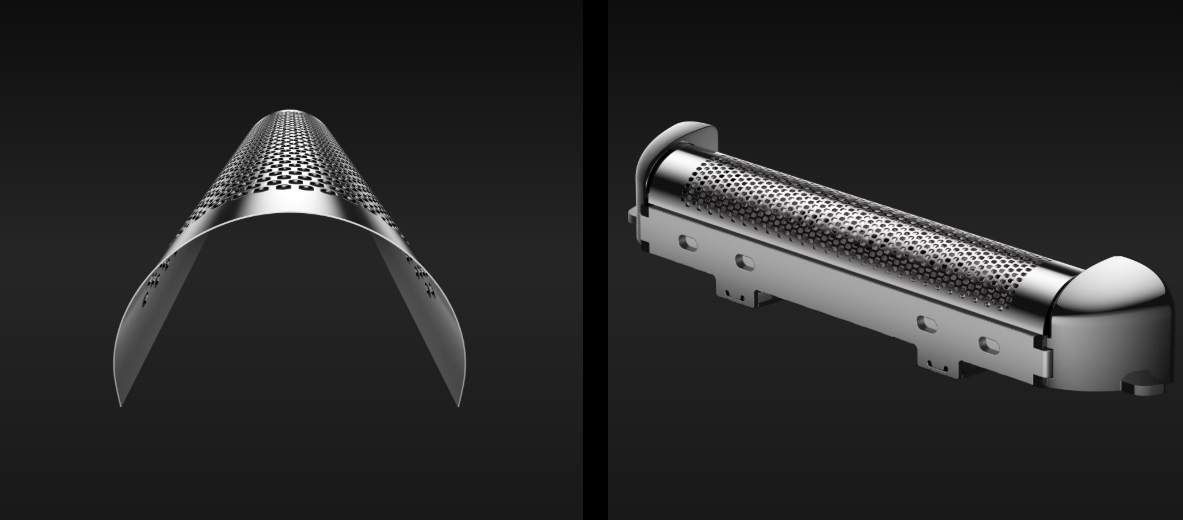
The shaving experience of an electric razor depends heavily on the quality of the foil. A direct comparison between electroformed foils and traditional stamped foils reveals clear differences in hole uniformity and skin smoothness—no precision instruments needed. You can tell them apart just by looking closely or trying them out: Electroforming's extreme precision makes it the key component for optimizing shave comfort, while conventional stamped foils, limited by inherent process constraints, significantly reduce overall shaving comfort.
Traditional stamped mesh: inherent process flaws and significant user experience limitations.
The performance limitations of standard punched mesh are inherent to the manufacturing process. Formed by mechanically stamping metal sheets with molds, this method is constrained by both mold precision and material stretch characteristics. As a result, hole size tolerances typically exceed ±0.05mm, often causing holes to shift or deform due to uneven stress during punching. Additionally, the cutting edges develop burrs that remain even after basic deburring, leaving the mesh surface rough and sharp.
Many users report that shavers with stamping cutter nets frequently miss short hairs. The rough surface creates noticeable drag on the cheeks, causing redness and stinging for those with sensitive skin. These issues worsen over time: within about 3 months, deformed or misaligned mesh holes begin snagging hairs, significantly degrading the shaving experience.
Electroformed Shaver Foil: Precision Electrochemical Forming to Address All Key Pain Points
The electroforming mesh blade utilizes an electrochemical metal ion deposition process to eliminate defects inherent in stamping. During production, metal ions deposit uniformly on a high-precision master mold, ensuring net aperture tolerances are tightly controlled within ±0.005mm. This results in consistent mesh specifications and precise alignment, with no skew or deformation.
The electroformed mesh achieves a mirror-like finish with no burrs or sharp edges. A light touch feels smooth and refined, eliminating the rough, granular texture typical of stamped meshes. Testing shows the electroformed blade reduces friction against skin by 40% compared to standard stamped blades, allowing the head to glide smoothly across your face without noticeable snagging or pulling.
The difference between the two blade systems is clearly reflected in shaving efficiency and lifespan.
Stamped blade mesh has uneven holes, allowing short stubble to slip through and requiring repeated scraping that irritates the skin and slows shaving. Electroformed blade mesh features uniform, precisely sized holes that capture all hair lengths effectively, achieving a single-pass shave rate of over 95%.
Regarding durability, stamped blade grids experience stress concentration at the perforation edges and wear or deform after approximately 6 months of continuous use. In contrast, electroformed blade grids feature a dense structure with uniform internal stress distribution, offering a normal lifespan of 12 to 18 months while maintaining consistent perforation accuracy and smooth skin feel over extended use.
For consumers, the choice between electroformed and standard stamping foil isn't just about production costs—it's about two distinctly different shaving experiences. With uniform mesh holes and a smooth, skin-friendly feel, the advantages of an electroformed foil are immediately apparent. Thanks to these tangible improvements, more consumers who prioritize refined skincare and a premium shave are opting for rotary electric shavers equipped with electroformed foils.